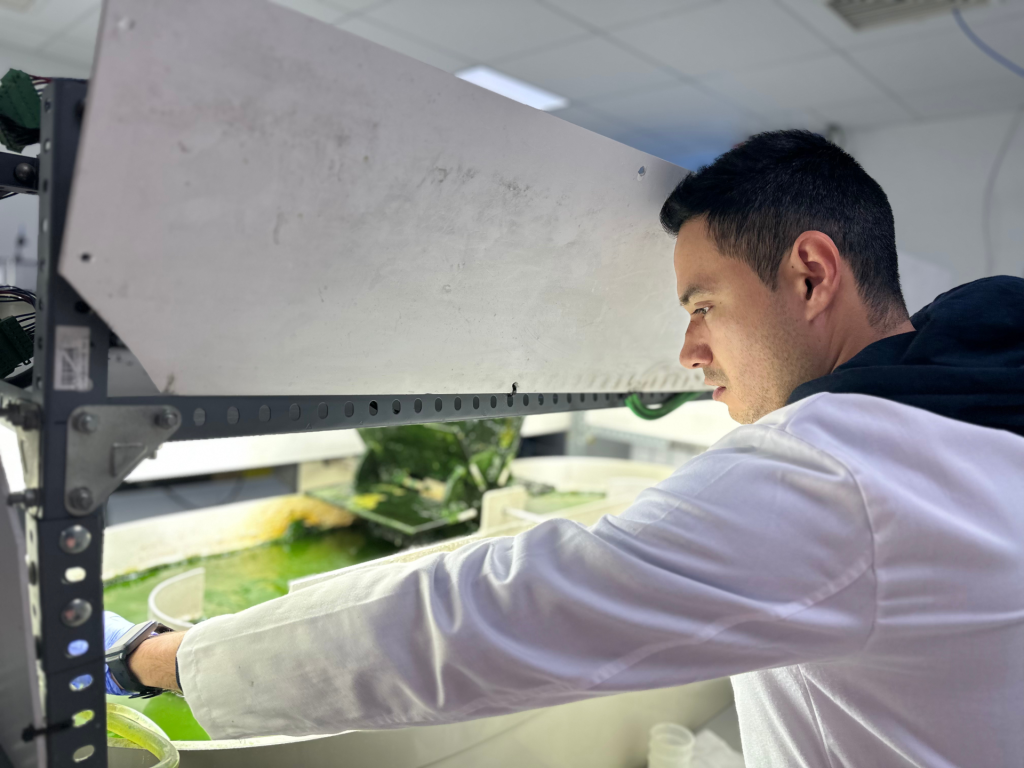




The kick-off meeting took place in Móstoles, at Rey Juan Carlos University, on 21 and 22 January.
Waste management is key to moving towards a circular economy and reducing pollution, but efficient technological solutions are still lacking, especially in the field of urban biorefineries. In this context, researchers from the Institute of Sustainable Processes (ISP) at the University of Valladolid (UVa) are part of the consortium of the European POST-PURPLE project which promotes technologies based on innovative photobioreactors to prevent, reduce and convert gaseous, solid and liquid waste streams from sewage treatment plants and municipal solid waste treatment plants.
On 21 and 22 January, the 14 partners in the consortium, including universities, research centres and institutes, technology companies, associations and other cooperation platforms, met in Móstoles at the Rey Juan Carlos University. The meeting marked the official launch of POST-PURPLE and provided an opportunity, to review the work plan, establish monitoring indicators and define collaboration strategies between the partners from Belgium, Austria, the United Kingdom, Portugal, Germany, Greece, Serbia and.
The project, funded by the European Union under the Horizon Europe will last three years and have a budget of €3,995,126 to transform wastewater treatment plants and municipal solid waste treatment plants into true photobiorefineries where waste streams are converted into high value-added products such as carotenoids, omega-3 fatty acids, coenzyme Q-10, microbial protein and enriched irrigation water, in line with the European Union’s Zero Waste and Zero Pollution objectives.
With funding of around €350,000, the ISP will work on recovering CO2 and nutrients present in gaseous waste streams and saline liquid effluents from a biogas recovery fermenter, developed and validated in the previous Deep Purple project. To this end, the microalgae Dunaliella salina will be cultivated in open ponds. This microalga, capable of growing in highly saline environments, will enable the recovery of beta-carotene and omega-3 fatty acids from waste streams, two compounds that are notable for their antioxidant and anti-inflammatory properties for health.
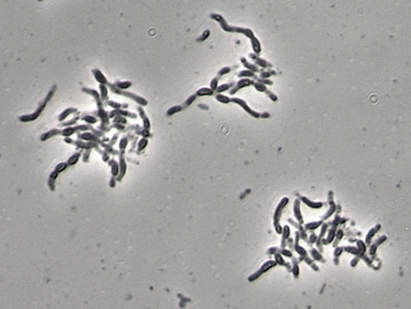
In addition, in collaboration with Rey Juan Carlos University, the ISP will also carry out genome-guided bio-discovery and cultivation of new biotechnological platforms based on thermophilic photosynthetic purple bacteria (PPB), aimed at converting synthesis gas into carotenoids and coenzyme Q10.